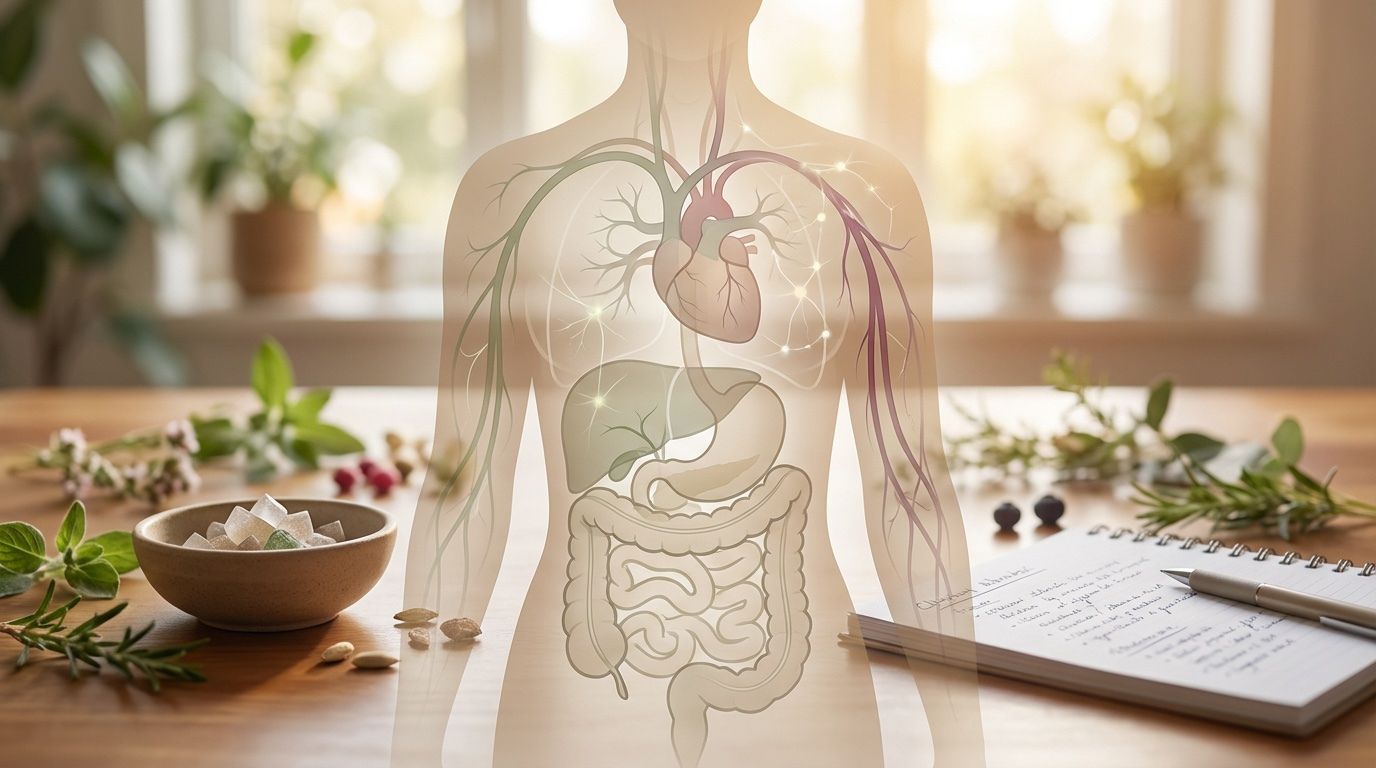
Anatomy & Physiology
AP 201 | Term 5 | Tier 2
Learn how the human body is built, regulated and kept in balance, with every body system taught through its relevance to holistic nutrition practice.
Course description
Human Anatomy and Physiology begins the advanced Holistic Nutritionist portion of NutraPhoria’s seven-term diploma. It is the first course in Tier 2 and Term 5 overall, following the four-term Holistic Nutrition & Health Coach Certification. Students enter with a foundation in nutrition science, individualized support and coaching. This term takes them deeper into normal human structure and function so they can understand the body beneath the nutrition concepts they already know.
Earlier terms introduced cell biology, digestion, blood sugar, hormones, immunity, genetics, metabolism and hydration through nutrition and client support. Those foundations become the starting point for detailed study of anatomical organization, tissue structure, organ function, transport, signalling, feedback control and cooperation among body systems.
The term begins with anatomical language, cells, tissues and homeostasis, then moves through every major body system. Students follow how a nerve signal travels, how muscle contracts, how the heart moves blood, how the lungs exchange gases, how hormones coordinate activity and how the kidneys regulate fluid chemistry. They connect each process with the organs and systems that keep it working.
For a holistic nutrition practitioner, this science explains what must occur before food, nutrients and lifestyle choices can influence health. Nutrients must be digested and absorbed, carried through circulation, moved into cells, used in physiological processes and eliminated through the appropriate routes. Sleep, stress, movement, environment and life stage also affect health through identifiable structures and regulatory processes.
Students learn normal human function before examining pathology and advanced symptomatology in Term 6. The 300-hour term gives them time to study every body system in detail, trace processes step by step and connect what happens in one system with what happens in the others. The course uses a university-level anatomy and physiology textbook to ensure depth, supported by NutraPhoria study sheets, pathway tracing, cumulative review and whole-body integration activities.
What students study
Students study the body from cellular organization through reproduction and ageing. Students examine structures, tissues, regulatory processes and the cooperation required among body systems during ordinary physiological events.
Body organization, cells and tissues
Learn anatomical position, directional terms, body regions and cavities before moving through cellular structure, membrane transport, communication, cell division and the four primary tissue types. Students see how cells form tissues, organs and connected systems. Membrane transport becomes the basis for understanding how nutrients, water and electrolytes move into and out of cells.
Homeostasis and physiological regulation
Examine how receptors, control centres and effectors keep internal conditions within a life-sustaining range. Students trace feedback loops and learn how nervous, endocrine, respiratory, renal and cardiovascular regulation work together as internal demands change. Students see why blood sugar, fluid balance and body temperature are held within such narrow ranges and what shifts them.
Skin, bone, joints and muscle
Study protection, temperature regulation, bone formation and remodelling, joint structure, movement and muscle contraction. Students connect tissue structure with circulation, nerve supply, cellular energy, physical loading, repair and age-related change. Bone remodelling and muscle repair show why protein, calcium, vitamin D and regular movement matter for tissue health across the lifespan.
Nervous and sensory systems
Follow electrical signalling through neurons, the spinal cord, brain, peripheral nerves and autonomic divisions. The senses are studied as routes through which the body detects and interprets internal and external information that can influence movement, digestion, appetite, sleep and stress responses. The autonomic nervous system explains how ongoing stress can slow digestion and change appetite, a connection students return to in client work.
Endocrine communication
Examine hormone production, transport, receptors, target tissues and feedback control. Students learn the major endocrine glands and follow how hormonal signals coordinate growth, energy use, stress responses, fluid balance, reproduction and other physiological functions. Insulin, thyroid hormones and cortisol are followed from signal to target tissue, giving students a clearer view of how meals, sleep and stress affect hormonal regulation.
Blood, heart and circulation
Study blood cells, plasma, clotting, heart structure, electrical conduction, the cardiac cycle, blood vessels and circulatory routes. Students trace the movement of oxygen, nutrients, hormones, heat, immune cells and metabolic waste through the body. Red blood cell formation is connected with iron, vitamin B12 and folate, and circulation is studied as the route every absorbed nutrient must travel.
Lymphatic, immune and respiratory function
Learn how lymph returns tissue fluid, transports absorbed fats and supports immune activity. Students follow air into the lungs, examine ventilation and gas exchange, and trace oxygen from the atmosphere through circulation to body tissues. Oxygen delivery is linked with cellular energy production, and the immune tissue lining the gut is connected with digestive health.
Digestive anatomy and energy use
Follow food through the gastrointestinal tract and examine the organs, tissue layers, secretions and movements involved in digestion and absorption. The liver, gallbladder, pancreas, intestinal lymph and circulation are connected with the body’s use of absorbed materials. Students follow carbohydrates, proteins and fats to the point of absorption and learn which organs and secretions each one depends on.
Urinary, fluid and acid-base regulation
Trace blood through the kidneys and filtrate through the nephron. Students study urine formation, fluid compartments, electrolytes and acid-base control, including the shared work of the kidneys, lungs, circulation and endocrine system. This explains why hydration and electrolyte guidance must change when kidney function, activity level or medications change.
Reproduction, development and ageing
Study reproductive anatomy, reproductive cycles, conception, development, pregnancy, birth, lactation and inheritance. Changes across the lifespan are brought together so students can connect normal physiology with the needs of different life stages. Nutritional needs during pregnancy, lactation, growth and ageing are grounded in the physiology behind them.
Practitioner training throughout the term
Tier 2 asks students to work with science at a higher level. They trace physiological events from beginning to end, explain regulation in their own words and connect several systems with the nourishment and lifestyle concepts already studied in Tier 1.
Trace how the body works
Students follow nerve impulses, blood flow, air movement, digestion, absorption, lymphatic flow, kidney filtration and hormonal feedback in the correct order. They explain what starts each process, how it is controlled and what must happen next. For example, students follow dietary fat from bile emulsification in the small intestine into the lacteals, through the lymph and thoracic duct and into the bloodstream.
Connect systems across the body
Students examine physiological events that require several systems at once, such as responding to movement, maintaining blood pressure, regulating temperature or transporting an absorbed nutrient. This develops the whole-body reasoning needed for advanced practitioner study.
Deepen the nutrition connection
Students revisit nourishment, hydration, sleep, stress, movement, environment and life stage through the structures and physiological processes they influence. They learn to explain these relationships accurately and use stronger physiological questions in later case analysis.
Learning outcomes
By the end of this term, students will be able to:
- Trace an absorbed nutrient from the digestive tract through blood or lymph to the cells that use it.
- Connect digestion, circulation, respiration, cellular transport and elimination with the body’s ability to receive and use nutrients.
- Explain how the nervous and endocrine systems influence appetite, digestion and energy use.
- Relate hydration, electrolyte balance and kidney function to everyday nutrition and lifestyle guidance.
- Use standard anatomical terms to describe location, direction, planes, regions and body cavities.
- Explain the relationship between structure and function at cellular, tissue, organ and system levels.
- Describe homeostasis and trace the parts of common feedback systems.
- Explain membrane transport, cellular communication, protein synthesis and cell division.
- Compare epithelial, connective, muscle and nervous tissues by structure, location and function.
- Explain how the integumentary, skeletal, joint and muscular systems provide protection, support and movement.
- Trace nerve signalling and describe the main functions of the central, peripheral and autonomic nervous systems.
- Describe endocrine communication, hormone action, target tissues and feedback control.
- Identify the components of blood and explain their roles in transport, defence and clotting.
- Trace blood through the heart, pulmonary circulation, systemic circulation and hepatic portal route, and explain how cardiac output and blood flow are regulated.
- Trace lymphatic flow and compare innate and adaptive immune responses.
- Explain ventilation, gas exchange, gas transport and the control of breathing.
- Trace food through the digestive tract and explain digestion, absorption and the roles of accessory organs.
- Trace filtrate through the nephron and explain urine formation, fluid regulation, electrolytes and acid-base balance.
- Describe reproductive anatomy, reproductive cycles, fertilization, development, pregnancy, birth and lactation.
- Explain how several body systems cooperate to maintain life during rest, activity and changing internal demands.
- Communicate a physiological process clearly using correct terminology and an ordered sequence.
How students learn
Students use a university-level textbook, animated and video learning, NutraPhoria study sheets and cumulative review. Students draw on their Tier 1 nutrition knowledge throughout. The work moves from identifying structures to explaining function and connecting systems across the body.
Continue to Term 6
Pathology & Advanced Symptomatology
Build on normal anatomy and physiology by examining how altered function develops, how concerns can appear across connected body systems and how practitioners organize complex client information.
Accreditation
The NutraPhoria Integrative Health Institute’s programs and courses are recognized in Canada, the U.S., and globally. To learn more about the accrediting bodies listed below, registration and board certification, visit our Accreditation page.




 Add to Preferred Sources