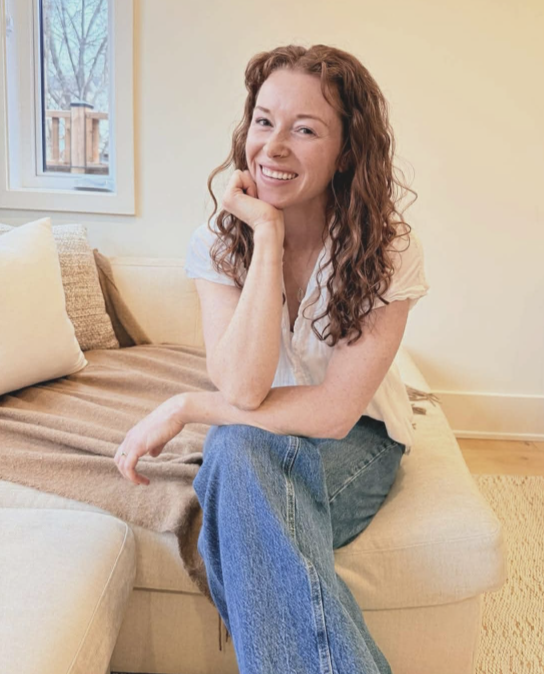
This month, we’re excited to shine the spotlight on NutraPhoria Alumni Shannon McKirdy, whose journey highlights the power of lived experience, resilience, and purpose-driven work. After spending over a decade in public health, Shannon’s own fertility challenges led her to explore holistic nutrition and to uncover the deeper connections between stress, nourishment, and hormonal health. What started as a personal healing journey quickly evolved into a passion for helping other women feel seen and empowered on their path to conception. Through her practice, Fueled For Fertility, Shannon combines functional HTMA testing with a compassionate, individualized approach to guide clients toward sustainable, meaningful results. Her story is a powerful reminder that true healing begins when we support the body as a whole and honour its unique rhythms and innate ability to restore balance.
Can you share a bit about your background, specialization, and what first inspired you to pursue holistic nutrition?
I’m Shannon, I’m a Registered Holistic Nutritionist, and the owner of Fueled For Fertility – where I help women who feel stuck and overwhelmed on their fertility journey uncover what’s holding their body back and use functional testing to create a clear, personalized path toward pregnancy.
The health field has always interested me. At first, I thought I would go into nursing, or physiotherapy or something like that, but I ended up working in local public health as a health inspector for the last 12 years or so.
Becoming a holistic nutritionist is actually a newer adventure for me. My journey into it kind of started about 5 years ago when I was struggling to get pregnant. I was in a situation a lot of women likely find themselves in – over-exercising, undereating, intermittent fasting and was on the birth control pill for over a decade. So it’s really no wonder my body wasn’t ready to conceive!
I started listening to a lot of podcasts on fertility and women’s health, and stumbled upon a few that really resonated with me, which furthered my “obsession” with nutrition and holistic healing.
This is what ultimately led me to become a holistic nutritionist- so that I could learn more for myself, as well as one day be able to share my experiences and help others reach their goals of having their dream family.
What’s your unique approach to holistic nutrition, and how does it shape the way you support your clients?
I definitely don’t strive for perfection anymore. I make a solid effort to be consistent with my nutrition, sleep, movement, etc., but when life comes up, I don’t feel the guilt I once did. When it comes to supporting your health, perfection really isn’t an option. You can eat a perfectly balanced meal every day for the rest of your life, but over time, your mental health will suffer. On the flip side, if your stress levels are high and you’re not sleeping well, the nutritious meal you eat won’t be digested and absorbed efficiently, and you will miss out on important nutrients. Balance and consistency is key, but striving for perfection will be your downfall and hold you back from actually reaching your health goals.
So, I try to help clients understand this deeply as well. So I meet them where they are at, and go slow if needed. I make sure to match their pace and comfort level when implementing new strategies.
If they think that all their progress is lost because of a few “cheat” meals, or if they dread our follow-up calls because they think I will judge them for eating a whole pizza, they’ll lose motivation to keep building on their progress and health journey.
How has your perspective on health and wellness changed or evolved since studying Holistic Nutrition?
I touched upon this a bit earlier, but since studying holistic nutrition, my entire perspective on health & nourishment has changed. I thought I was doing “healthy” things – like waking up early to do HIIT and intense strength training 6-7 days a week, intermittent fasting, and trying to be low carb. But, now, as I’m sure many readers can point out, these practices can actually be terrible for our hormones and overall health.
For some people, these practices may work, but definitely not everyone. Definitely not supportive of what my body needed. My nutrients were depleted from being on the pill for so long, waking up early for intense exercise was further depleting me and spiking my cortisol, coupled with trying to fast until noon and limiting carbs – my body was an absolute mess!
So, I’m so thankful that I was finally able to learn what was more supportive for my body and get to a place where I actually feel nourished, energized, and happy.
Since becoming a holistic nutrition professional, what’s one habit or daily ritual you’ve implemented that has had the biggest impact on your well-being?
Adrenal Cocktails! I try my best to have 1 daily, sometimes I forget and that’s ok, but I honestly have felt so much more energized since incorporating these. I had heard of them before, but since completing HTMA training, they have come up a lot as being so supportive for mineral health, which makes sense as its basically an electrolyte drink.
So many people are actually deficient in sodium and potassium or have an imbalance between the 2. If you can remember from high school biology, there’s a sodium/ potassium pump on every cell in the body, so they are very important for basic cellular functioning.
They are traditionally made by mixing about ¼ cup of orange juice (vitamin C), 1/4tsp of sea salt (sodium), and ¼ cup of coconut water (potassium). But instead of OJ, I use acerola cherry powder for the vitamin C source and cream of tartar for the potassium. I like coconut water- but it gets pricey to keep buying it! After doing my own HTMA, I found that my body was quite stressed and my adrenal glands were really struggling, so incorporating this as a daily drink has really helped with my energy.
How do you stay inspired and continue growing in the ever-evolving world of holistic wellness?
It’s not easy! So many times I’ve thought to myself – what’s the point, there are so many people out there that have been doing this longer, that are more “expert” than me, have more experience than me, etc.
But as I keep going, I realize that the right people will (and do) resonate with my story and me as a practitioner. I have also come to realize that yes, people have the information (from IG, from other online sources, AI tools, etc.), but it’s not what they really want. For some people, maybe, but I feel that the majority of women who are out there drowning in the generic fertility advice just want someone to guide them, make them feel seen and understood- someone to dive deeper into why their body isn’t ready to conceive. They want a personalized plan that’s simple and effective.
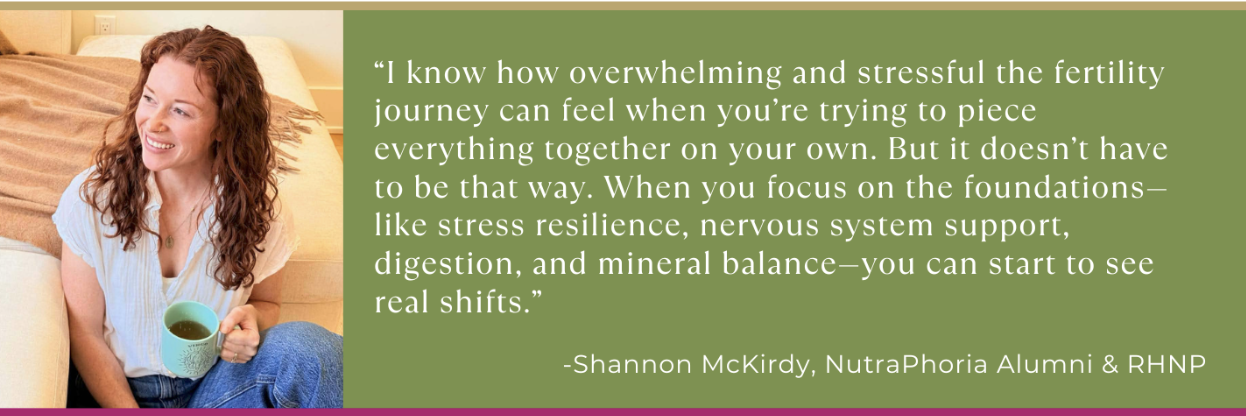
So I stay inspired to provide this for them! I know how time-consuming, stressful and overwhelming it is trying to navigate all the information out there on the best foods to eat, diets to follow, which supplements to take, you name it! I keep going because I just want women out there to know that your fertility journey doesn’t need to be this stressful and overwhelming. That focusing on the foundations, like stress resiliency, nervous system regulation, digestion & liver support, mineral balance, nutrition, etc., will make the biggest impact.
If you could give one piece of advice to current students or recent graduates, what would it be?
When it comes to working with clients, less is often more. As I mentioned before, they can get all the information and education they want. But this can lead to “analysis paralysis”. We’ve all experienced it in some aspect of our lives- we take in so much information about something, but as we keep researching, we find conflicting information. Then we don’t know which source is correct, or which option to choose, so we get flustered and don’t make any change at all. This is how your clients feel.
I fell into this, too, and still struggle with it. The more I can “impress” people with what I know, the better I’ll feel about my credentials and knowledge, and the less like an imposter I’ll feel. You may think this is what your client wants, but it is not what they need.
What they need is to know that you can help them get results, rather than providing them with more information, so they can continue trying to DIY it and not get any lasting change.
What’s next for you? Any exciting projects, goals, or new directions for your wellness practice?
I have recently taken a few courses on Hair Tissue Mineral Analysis, so I have been incorporating this into my practice. As a new practitioner, I think it’s great to be able to help people with their nutrition and lifestyle as it is, but when you can introduce functional testing, you can really elevate your services by providing individualized recommendations based on actual data. The HTMA is something that we, as holistic nutritionists, can order, and there are so many courses out there to learn how to interpret the tests. So I’m quite excited to dive even deeper with clients and help them faster because we can be much more targeted to their individual needs.
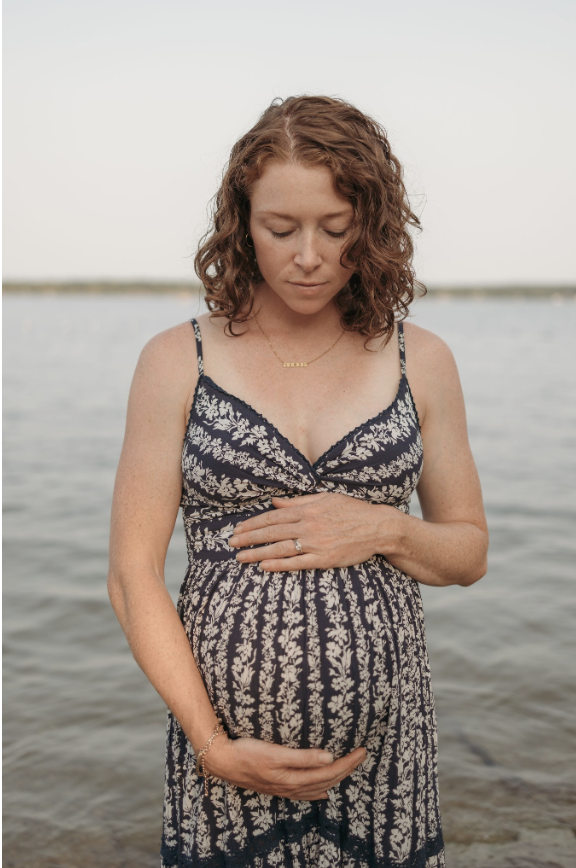
Shannon McKirdy, NutraPhoria Alumni and Registered Holistic Nutrition Practitioner
Website: https://www.fueledforfertility.com
Instagram: @fueledforfertility
Learn more about Shannon’s services by clicking here.
Make sure you never miss a Blog post, delicious recipe, updates about exclusive offerings and evidence-based fertility information and inspiration by signing up for Shannon’s e-mail list.

 Add to Preferred Sources